
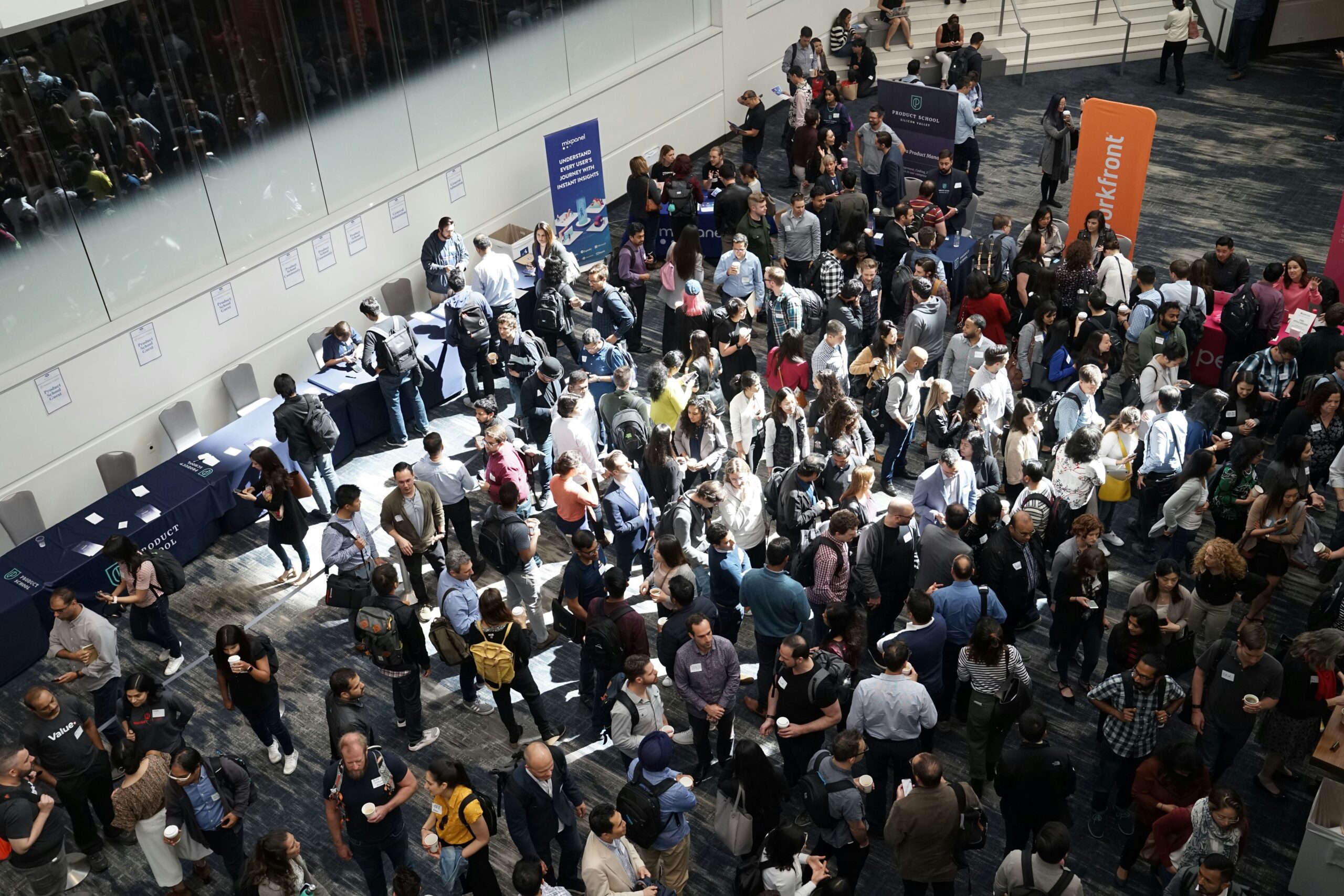
Trade shows are back. But they’re also back to being competitive, noisy, and expensive. In 2025, showing up is no longer enough – because your competitors are likely showing up too. If you’re going to invest in an event presence, your brand needs to cut through.
It’s not about being the loudest or most extravagant. It’s about being the most memorable. The most engaging. The one that people seek out rather than stumble across.
Here are seven proven ways to stand out on a busy trade show floor—and actually drive pipeline as a result.
1. Think beyond the booth: design for human energy, not just footfall
Many trade show stands are designed for traffic, not experience. Rows of demo pods. Branded walls. A couple of banners that scream product features. It’s functional—but forgettable.
Instead, design a space that mirrors how humans interact. Use curves and open zones to encourage conversation. Add breakout corners or sit-down areas for longer meetings. Introduce ambient lighting or audio (done subtly) to change the feel of the space.
You want your booth to feel different. Not louder or bigger—better. People don’t remember dimensions. They remember how your space made them feel.
2. Lead with a bold, clear message
You have about 3 seconds to get someone’s attention as they walk by. If your booth copy is full of jargon, acronyms, or 10-point lists of features, they won’t stop.
Instead, lead with a single bold message. A statement, a question, a challenge—something that speaks to your audience’s pain or ambition. Make it visual. Make it provocative. Make it readable at a glance.
Then let your team fill in the details once they’ve sparked a conversation.
3. Create an experiential hook (without gimmicks)
Gimmicks wear thin fast. But meaningful, on-brand experiences can drive serious engagement.
Think tactile, useful, or shareable. Could you let people try a mini version of your product? Could you create a short workshop, quiz, or challenge that’s relevant to your value proposition? Could you offer live demos that solve real pain points in under 3 minutes?
Interactive doesn’t have to mean flashy. It means involving the visitor in something that matters to them.
4. Make your people your secret weapon
People don’t engage with stands. They engage with humans.
Train your team not just on product knowledge, but on body language, empathy, and listening. Too many booths are staffed by either overly eager SDRs or passive subject matter experts. The best results come when both types collaborate.
A warm smile, a confident question, a relevant anecdote—these convert better than the biggest digital screen. And crucially, they build the kind of rapport that digital channels often miss.
5. Run a micro-campaign inside the event
Don’t just rely on foot traffic. The best trade show activations create pull.
You might host a “Coffee with a CMO” session at your stand. Or run a LinkedIn scavenger hunt. Or invite VIPs to a closed-door product preview. Use the event hashtag to tease these in advance and during the show.
This creates buzz within the trade show—turning your booth into a destination, not just a drop-in.
6. Amplify your presence across digital channels
If you’re investing in an event, don’t keep it siloed. A trade show should be a content engine.
Use the run-up to share behind-the-scenes posts, team intros, or speaker highlights. During the show, film short interviews, capture soundbites, or document trends you’re seeing. Post consistently on LinkedIn with a mix of real-time updates and useful content.
After the show, turn it into a retrospective. What did you learn? What questions kept coming up? What’s the follow-up content that extends the value for attendees?
Trade shows are not just about who visits your booth. They’re about who sees you making an impact—even from afar.
7. Treat lead capture like a conversation, not a transaction
Too many brands focus on how to collect the most badge scans. But quantity without qualification is just noise.
Instead, arm your team with better questions. Let them determine lead quality in real time and take notes that sync directly with your CRM. Better yet, personalise the follow-up plan at the booth. If someone expresses interest in a specific use case, tag them for a relevant nurture track immediately.
It’s not about collecting contacts. It’s about starting relationships that convert after the show.
Memorability over spectacle
Standing out doesn’t mean being the biggest brand on the floor. It means being the one people remember. The one that delivered a great conversation. The one that sparked a useful idea. The one that felt worth the time.
If you can design an event presence around that goal – not just branding or budget – you’ll leave with more than a flashy booth photo. You’ll leave with pipeline.
Want the latest B2B marketing news straight to your inbox? Subscribe to our free weekly newsletter!
Interested in sales, marketing or business skills courses and training? Check out our training partner, Learning Room.
 Whether you want to learn how to use LinkedIn, X or Facebook for marketing, or need to brush up on business skills like leadership, presentation skills or managing meetings, you will find something to enhance your professional skills with these on-demand courses.